Market Volitility
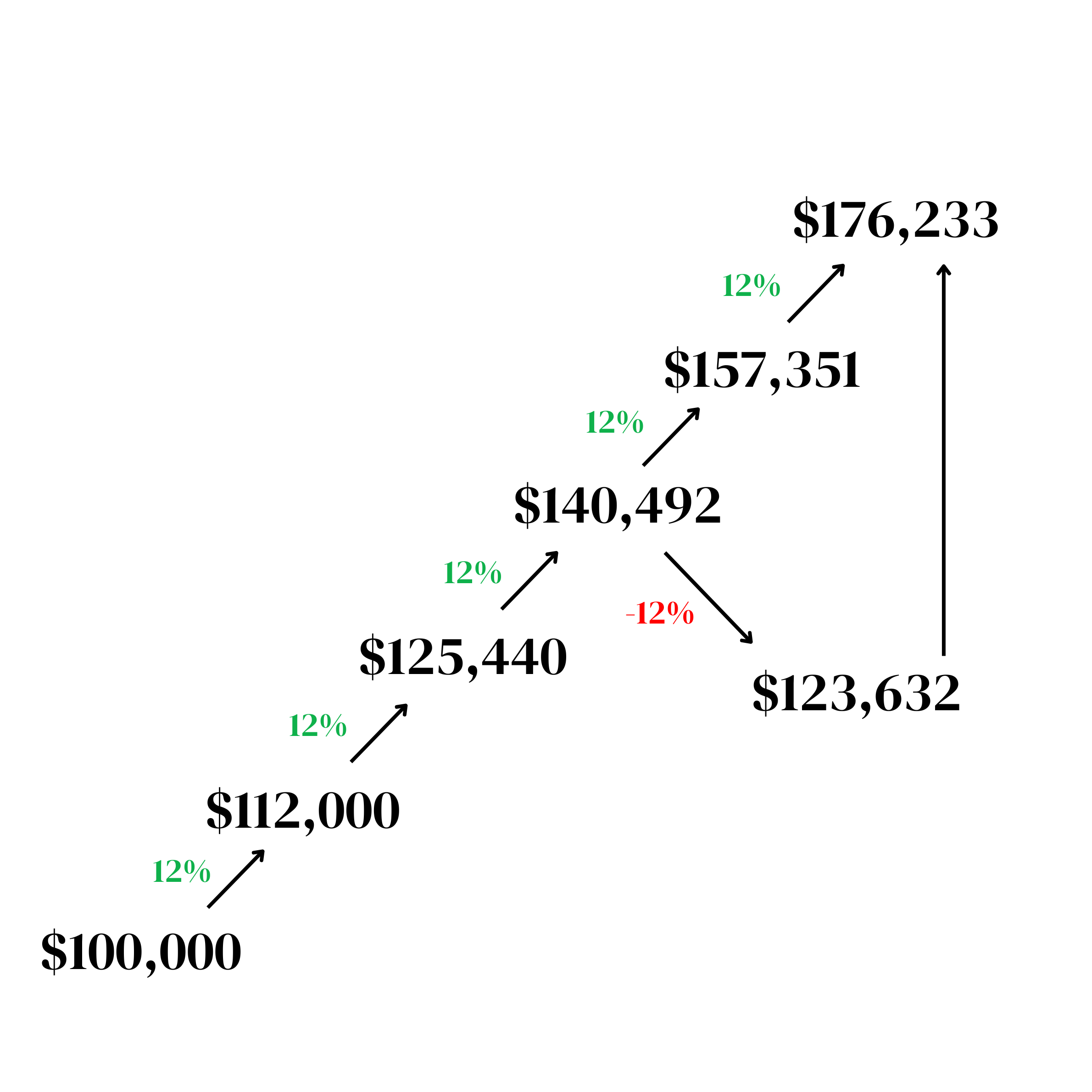
In this example, $100,000, grows by 12% for five consecutive years reaching a balance of $176,233.
but what happens when one of those years is a (-12%) year?how does that affect the balance?
After the negative year, the balance falls to $123,632. So, what rate of return would it take to get back to $176,233?
When we ask this question, the answer we often hear is 24%.
Understanding Market volatility
Understanding market volatility can make or break your portfolio’s performance. This example reinforces a Warren Buffett adage, avoid loses at all costs. The return necessary to recover from a dip in the market is often underestimated. In this example the common answer is 24% but the return necessary to recover adequately is 42%. If you take this further, you will uncover a larger problem. If after the negative -12% return you receive 24%, and the year after that 12%, not only will you have lost capital, but you will have lost another very important asset- time. There are ways to win the volatility game. However, they are often overlooked by traditional wealth management.